















18
Things to Do
2
Trails
0
Alerts & Advisories
About Battle of Athens State Historic Site
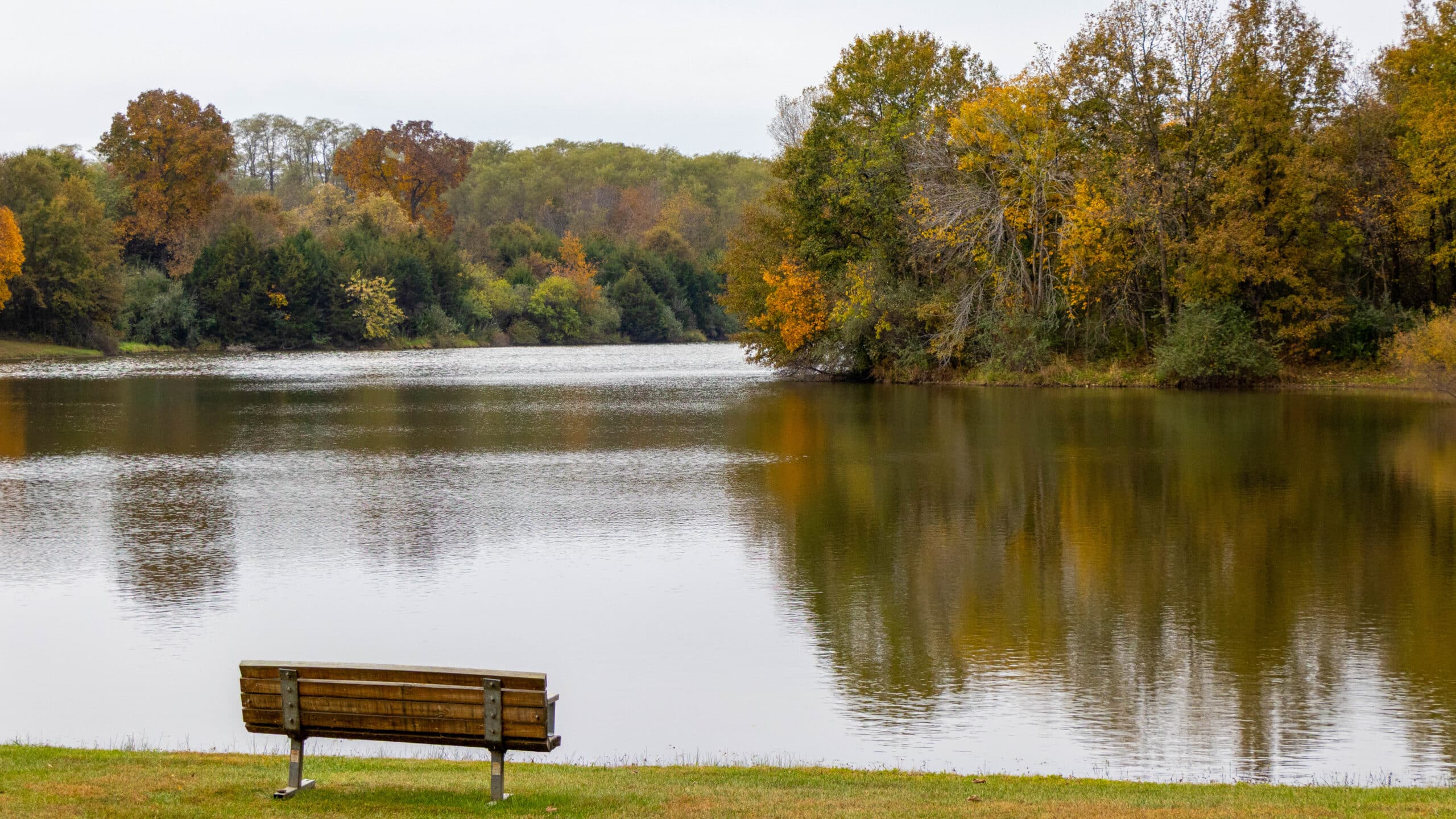
Visit the peaceful and serene Battle of Athens State Historic Site, where preserved buildings, tree-filled landscape and view of the Des Moines River make it a perfect destination for hiking in Missouri. Behind the tranquil scene is the history of the northernmost battle fought west of the Mississippi, where 500 Union soldiers held off nearly four times that number of pro-Southern State Guardsmen.
Read More About Battle of Athens State Historic Site
Visiting Today
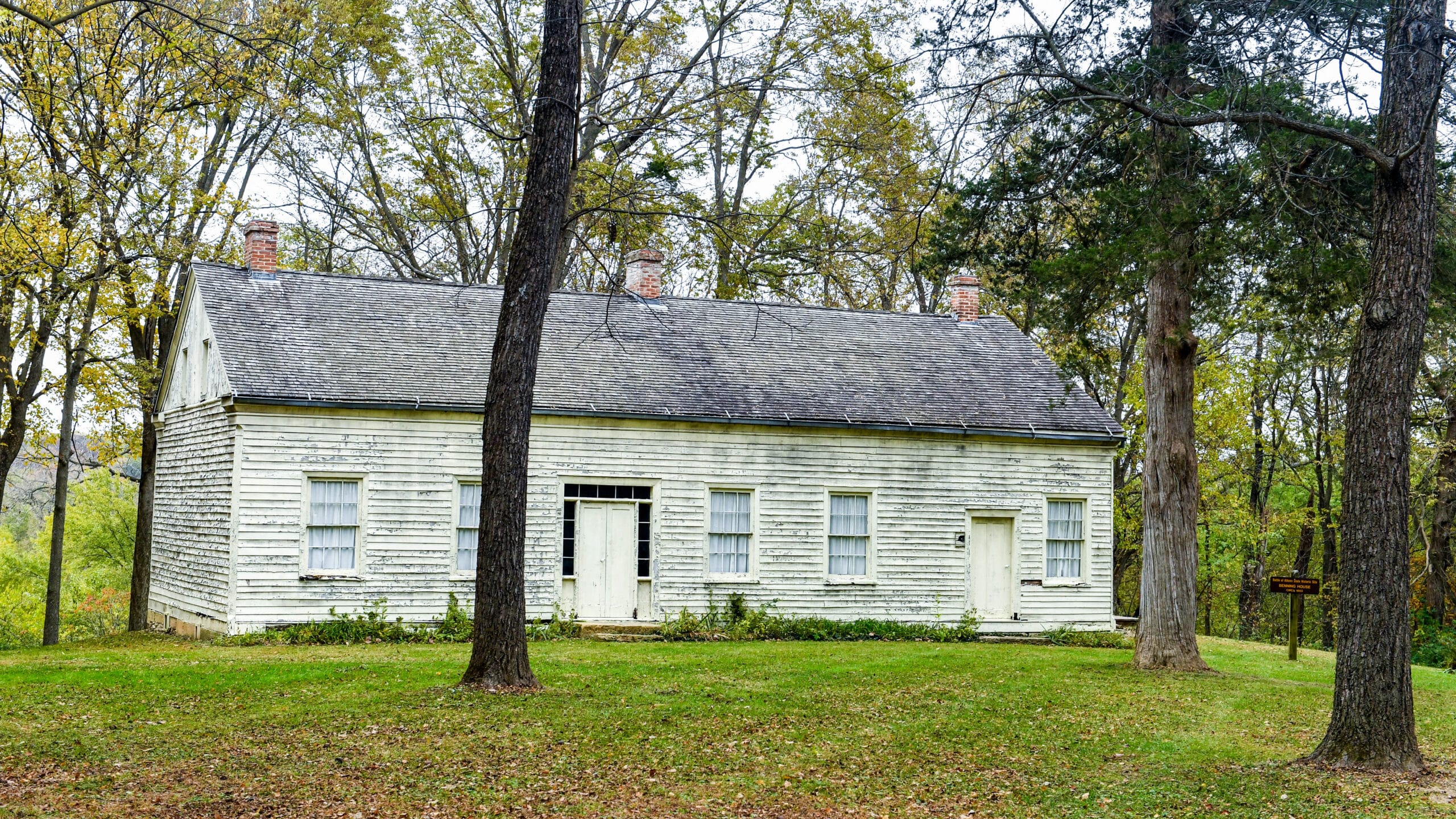
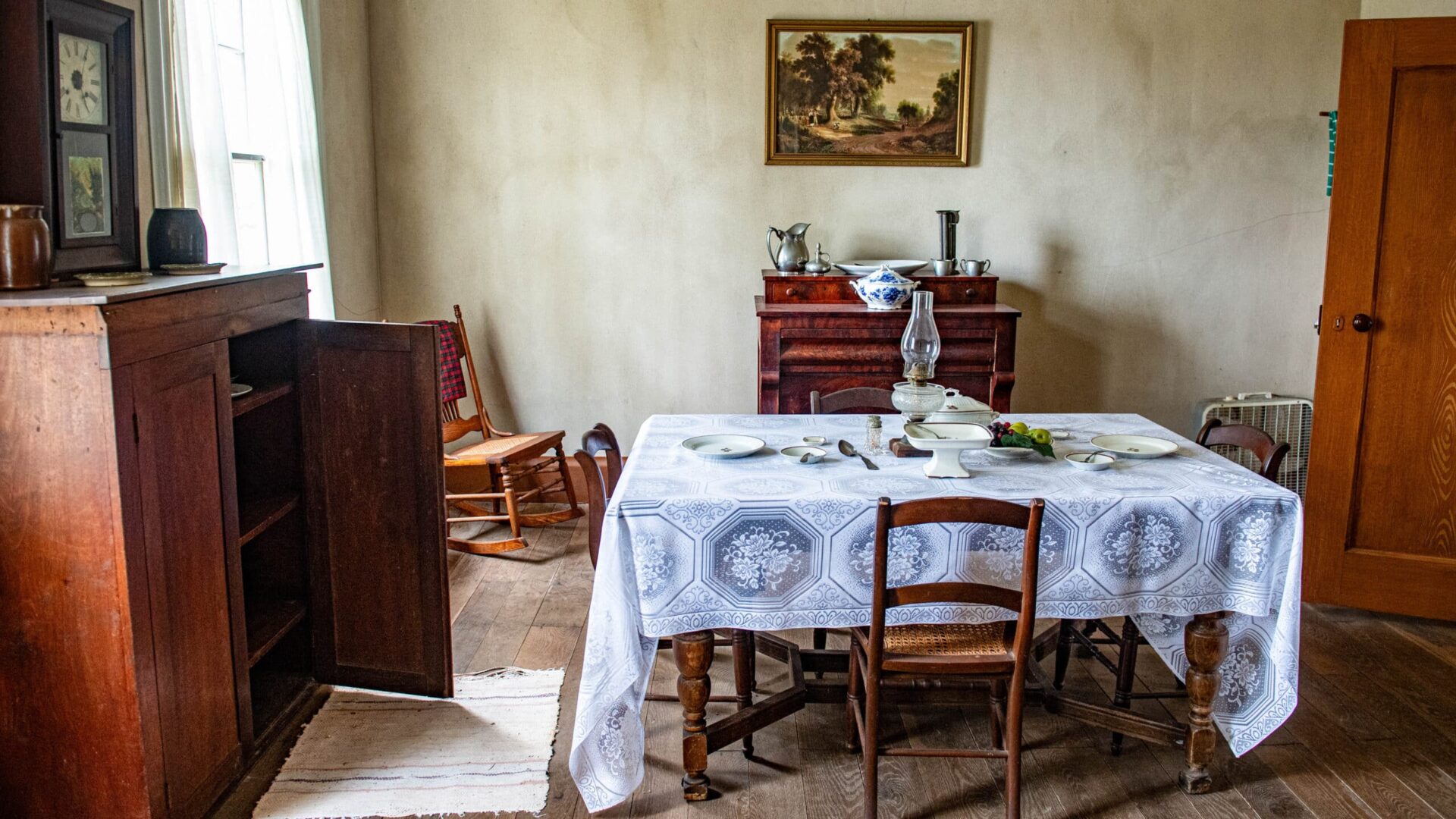
The Battle of Athens State Historic Site offers interpretive programs as well as tours of the historic town. Take time to explore several landmarks, including buildings such as one pierced by a cannonball during the battle, the Thome-Benning house.
You can also spend time pursuing one of the Battle of Athens State Historic Site’s recreational activities: hiking, fishing and boating, picnicking, camping or playing at the site’s playground.
Battle of Athens State Historic Site offers 1.5 miles of Des Moines River frontage, as well as the Des Moines River Ravines Natural Area, where several rare ferns and wildflowers thrive.
The History of Battle of Athens State Historic Site
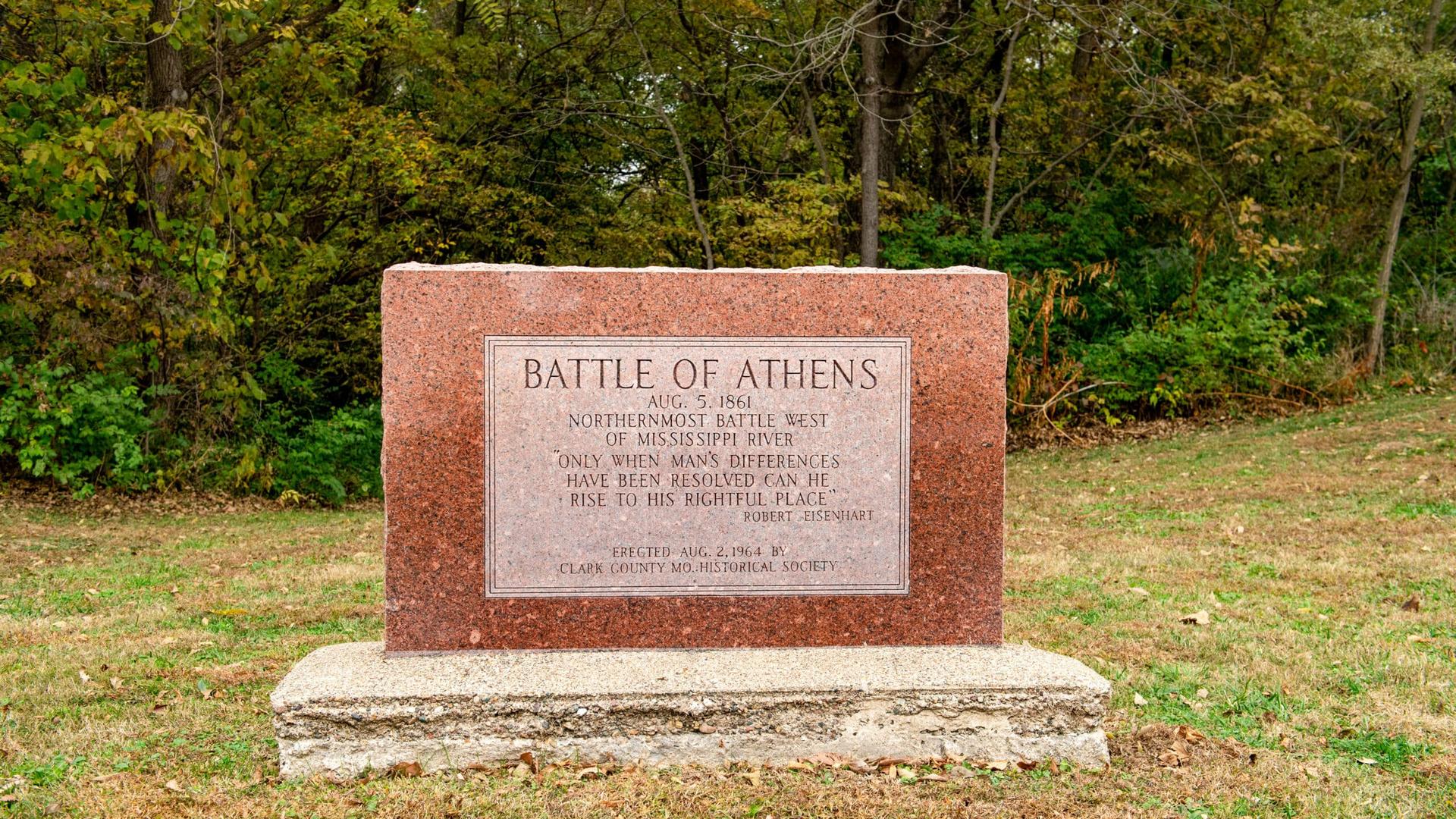
The Battle of Athens, Missouri’s northernmost Civil War battle, not only had a significant impact on the town, but was also integral in maintaining Union control of northeast Missouri.
Long before the battle, the site was settled around 1831 by John Boon of Kentucky. The town experienced rapid growth: by 1841, it had established a post office, and by the late 1840s, it boasted a population of about 500, supporting 50 businesses, five churches and a two-story public school.² Much of this prosperity was fueled by the federal lock and dam system on the Des Moines River, which turned Athens into a busy river port. This commerce supported a large hotel and a thriving mill that processed flour, cornmeal and lumber, as well as cotton and woolen products.
Much of the growth was due to the federal lock and dam system built on the Des Moines River, converting Athens into a busy river port. Athens had other thriving businesses, including a large hotel, and a mill that processed flour, cornmeal and lumber, as well as cotton and woolen products.
Archaeological evidence has revealed that Native Americans occupied the area, including an early 19th century settlement of Fox and Sac tribes.
A Loss of Life and Livelihood
The Civil War served as a defining event for Athens. Because the town was settled by Southerners, Unionists suspected it was pro-South. Regardless of earlier affiliations, by the spring of 1861, residents across northeast Missouri were compelled to declare their loyalties.
Pro-Unionists in the area found their leader in David Moore, who rallied about 500 men and entered Athens on July 24, seizing homes and businesses of pro-Southerners to quarter and provision the troops. Col. Martin Green, leader of pro-Southerners, raised a force of 3,000 men, including two of Moore’s sons.
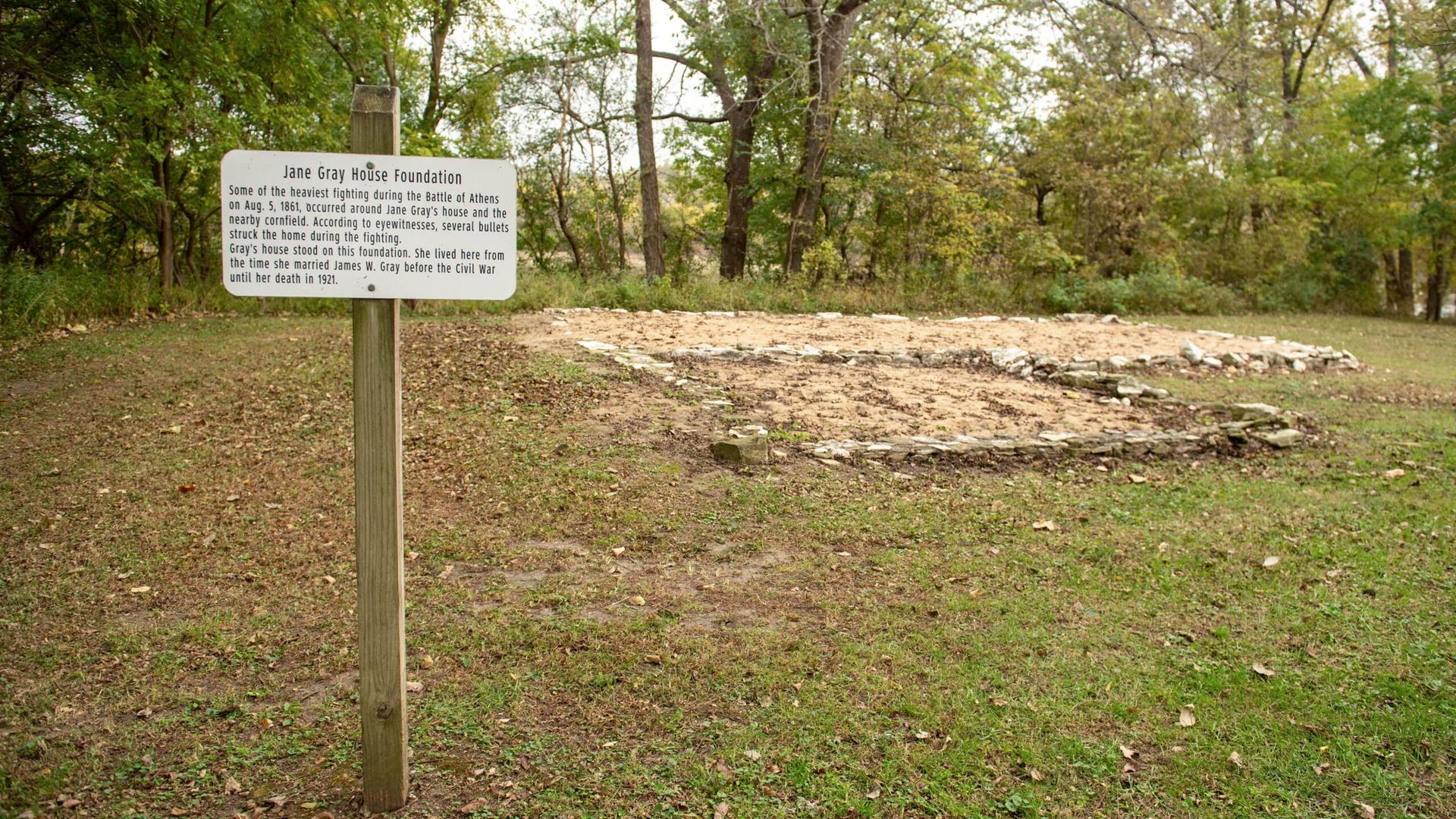
The tension erupted on Aug. 5, 1861, when a battle began around 5 a.m. Green’s troops surrounded Moore’s army on three sides, and the Des Moines River created the fourth wall around the Unionists. While they were vastly outnumbered, Moore’s troops were better equipped and trained for battle. Within two hours, 50 soldiers had been wounded or killed and the pro-Southern men were demoralized and in full retreat.
The losses included not only the lives of local men. By the end of the battle, Moore had captured approximately 500 horses, bridles and saddles and both firearms and long knives.
The effects of the short battle on the town of Athens were lasting, with bitter feelings remaining for decades after the Civil War. The shift from river to railroad transportation in the post-war era was also a factor and by 1900, the once-thriving town was significantly diminished.
The Battle of Athens was commemorated annually, with remembrances first held in 1868. In 1962, area residents formed the Athens Park Development Association, holding dances, raffles and a motorcycle hill climb to raise money to finance land purchases. Eventually, Battle of Athens Park was established, and in 1975, the group donated the park to Missouri State Parks.
In 1981, Battle Athens State Park began hosting Civil War battle reenactments, and in 1985, the site was distinguished as a state historic site.
Things to Do and See


















View All Things to Do and See
-
Address
12378 Athens State Park Road
Revere, MO
63465
Get Directions and GPS Coordinates
-
Phone
Office Phone:
660-877-3871
-
Hours
Historic Site Grounds
Sunrise to sunset, daily, year round
View All Hours
-
Follow Us on Facebook
View All Alerts and Advisories
Welcome to the New Missouri State Parks Website!
Parks Nearby
Maps
Trails
Hiking
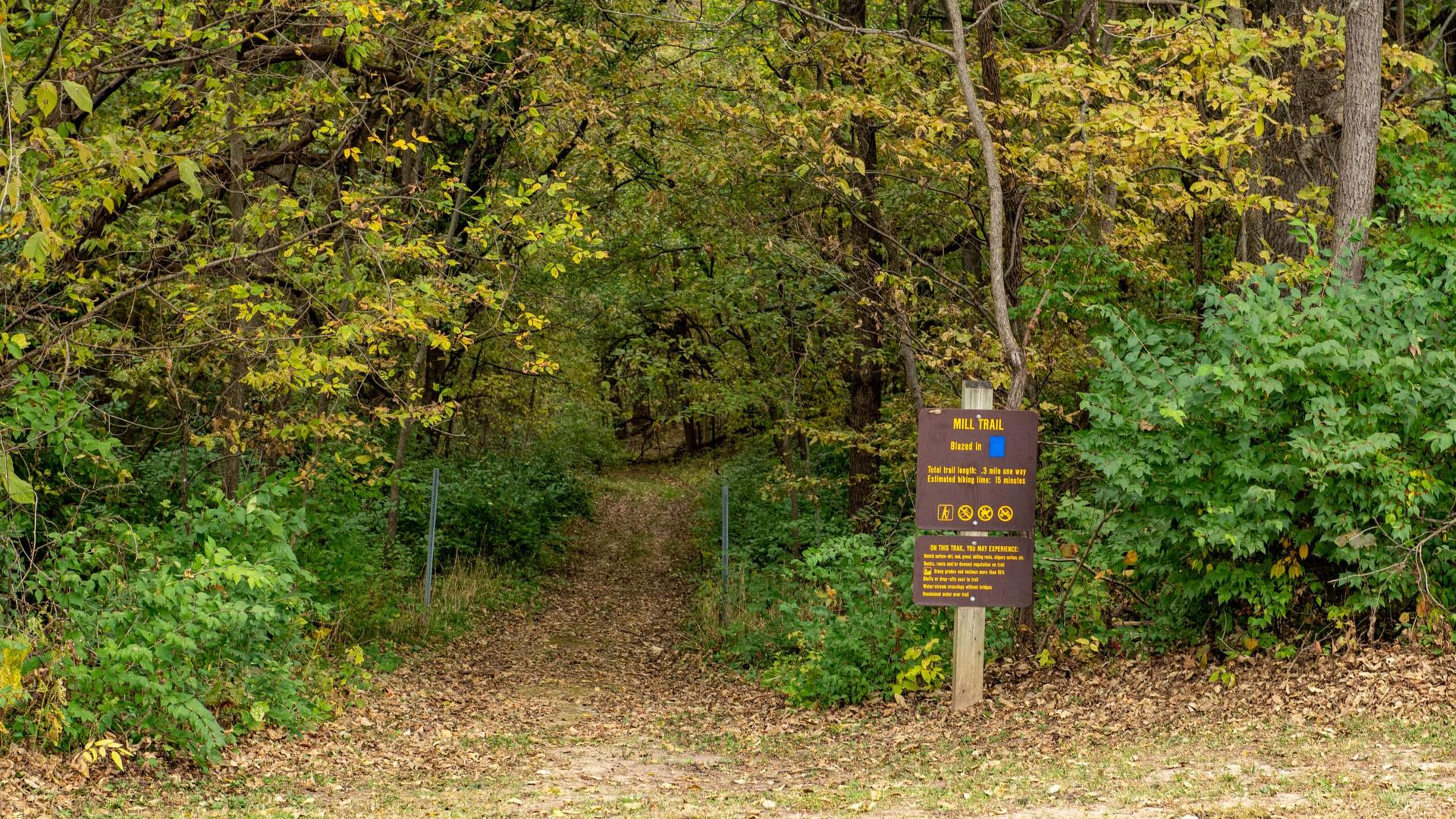
Mill Trail
Blazed in blue
Moderate •
0.30 Mile Loop •
15 Minutes
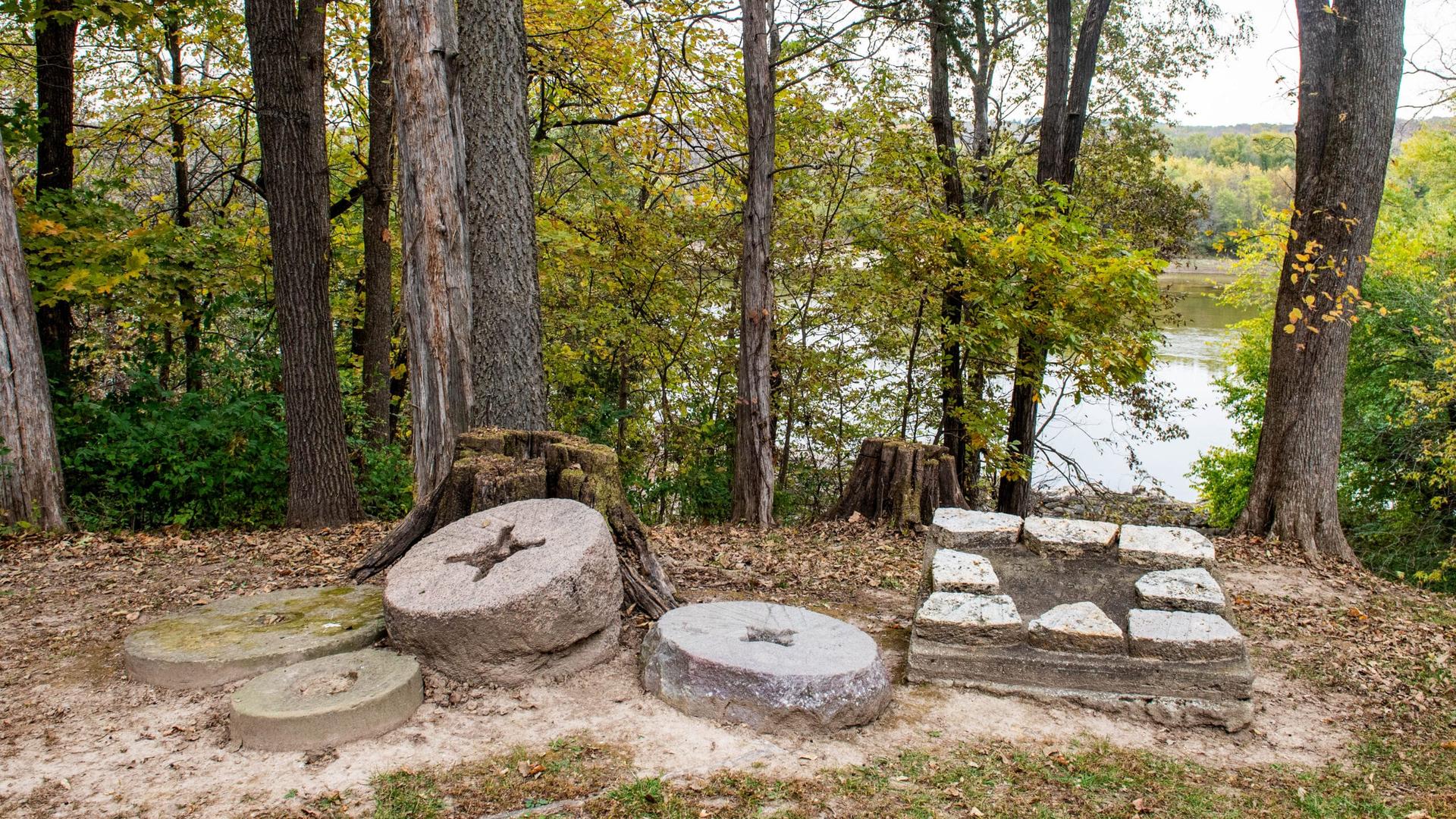
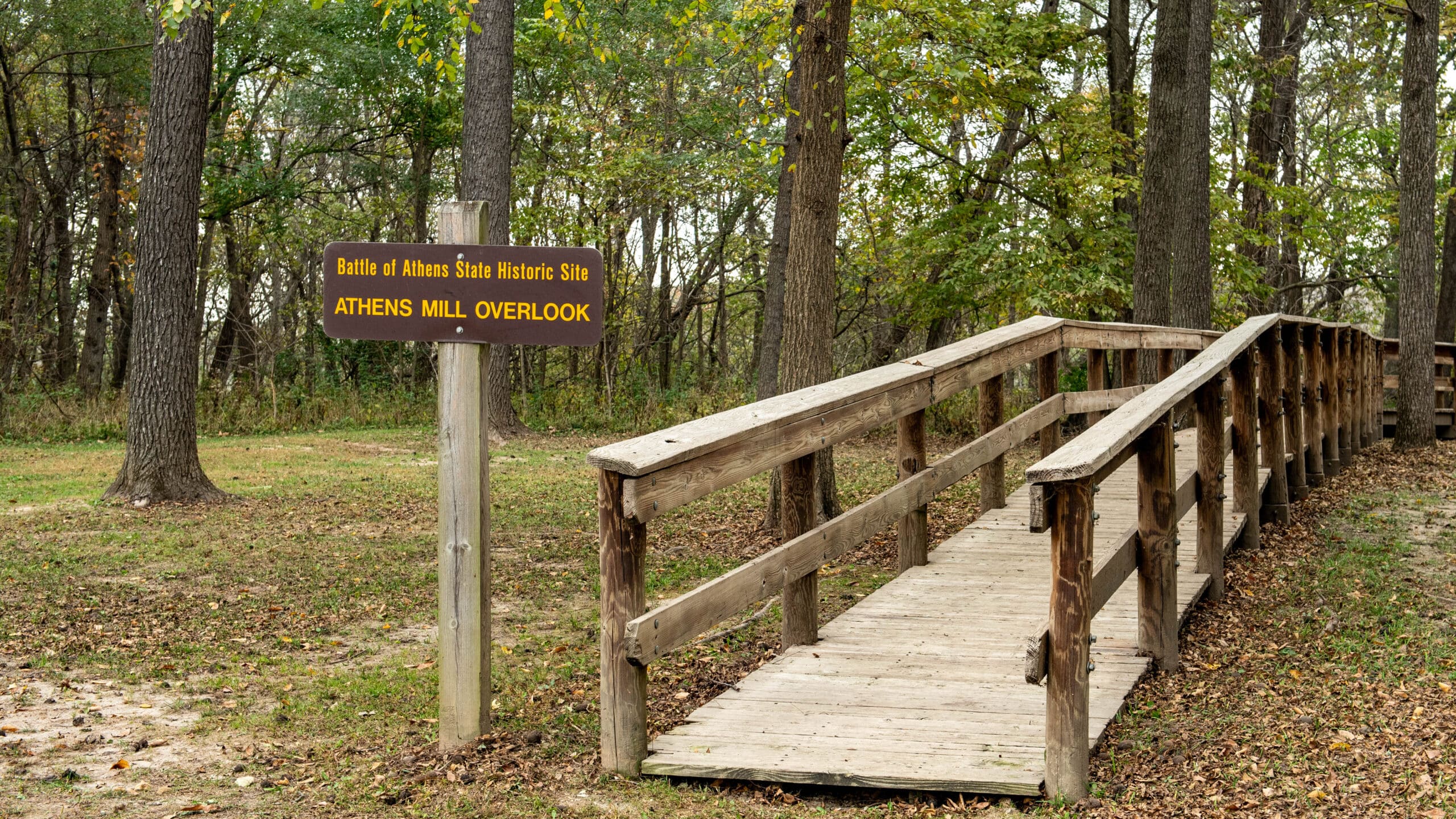
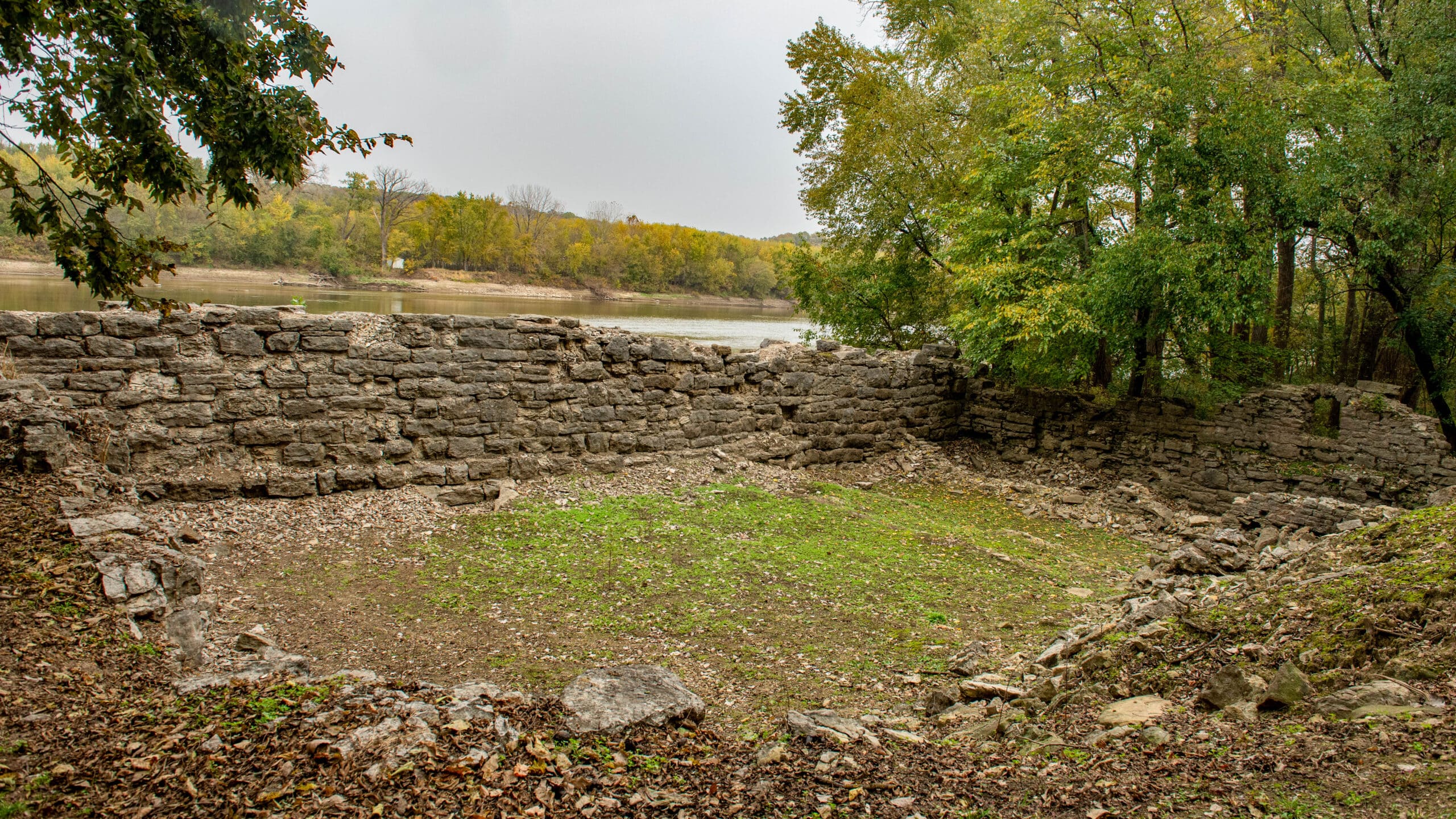
"The trail, which is short but scenic, gives a close-up view of the mill foundation and the Des Moines River. The trail follows portions of Stewart, Water, and Thome Streets in the historic 19th century town of Athens. This area was the original main business district before it was moved to Spring Street due to constant flooding and ice jams on the river. The Thome Benning house is located on the bluff above the trail. Portions of the trail follow the Des Moines River and pass remains of a mid 19th century mill.
This is one of several mill structures that stood at this location and were built in the mid 1850s. It was a grist and textile mill powered by water harnessed from a lock and dam system. The mill ran until the turn of the century. During the months of October through March, bald eagles may be viewed along the river section, where both mature and fledgling eagles feed. Inclines, rocks and low-lying ground may make this trail slippery and muddy during inclement weather.
"
Snow Trillium Trail
Blazed in orange
Moderate •
2 Mile Loop •
1 Hour 30 Minutes
"This trail starts in an upland forest that is fairly level and dry. At the apex of where the trail first splits, there is a small stream crossing. This stream only runs in rainy weather and is easily forded. the right side of the loop runs in the upland forest and stays on fairly level terrain. About a quarter of a mile after the trail splits there is an intersection with a short trail spur to the right and White Connector 2 to the left. The spur leads to the main road through the park and White Connector 2 offers a shorter and slightly less rugged route along a ridge top. A few hundred yards before the right side meets with the White Connector 1 trail, there are steep drop offs and cliff areas that drop into Stallion Branch. A wide variety of native woodland plants can be viewed in this section which is at its best early to mid spring. The dominant trees are hickory, walnut and oak. This is one of the most scenic portions of the trail. In the spring, small waterfalls cascade down the rock walls to Stallion Branch and during winter these form cascades of ice. The White Connector 1 has a large stream to ford with many rocks to traverse. During high amounts of rain, it cannot be forded. White Connector 1 ascends a steep valley leading onto the historic battlefield.
If you wish to bypass the white connector and continue along the main trail path, you will find yourself traversing the most rugged portion of Snow Trillium Trail. Carpets of snow trillium and other woodland plants hug the slopes of this portion of the trail along with a diverse group of ferns. Deer and turkey, plus the occasional glimpse of owls and bobcats, can be seen in this section. This portion has several small ravines with dry stream beds that only flow during heavy rains. Two of the ravines are steeper than 10 percent and require a short, strenuous hike out of the stream bed.
Once on the bluff tops, the views up and down the Des Moines River valley are extensive. This area was home to the Sac and Fox tribes through the early part of the 19th century. Halfway through this section on top of the river bluff is a series of sinkholes that the trail passes within a few feet. Sinkholes are created when a portion of limestone in a cave system collapses creating a surface depression. Continuing on, you will reenter the upland forest before rejoining the main entry section and heading back to the parking area."
I am interested in …


















360° Virtual Tours
Virtual Accessibility to Missouri’s Heritage
Virtual tours provide on-site accessibility and inclusivity, enhance cultural heritage and tourism, and expand our reach to visitors in Missouri and beyond. Check out the informational video for a sneak peek into what these tours have to offer. Virtual tour text is available in English and Spanish.
Click Here to view the 360 virtual tour for Battle of Athens State Historic Site:
View the instructions on navigating a 360 virtual tour.
These virtual tours were prepared by the Missouri Department of Natural Resources using federal funds under award 05-79-06166 from the U.S. Economic Development Administration, U.S. Department of Commerce. The statements, findings, conclusions and recommendations are those of the author(s) and do not necessarily reflect the views of the U.S. Economic Development Administration or the U.S. Department of Commerce.













Upcoming Events
Resources

Area Attractions and Links of Interest
Looking for more fun things to do in Missouri? Check out these area attractions and links of interest near Battle of Athens State Historic Site.
View List

Historic Site Video
Watch this video, which offers more information about what you’ll find at Battle of Athens State Historic Site, brought to you by Missouri State Parks.
Watch Video

2025 Public Meetings
Public meetings allow Missouri State Parks to invite citizen involvement and provide updates and future plans for Battle of Athens State Historic Site.
View Meeting Information
Alerts & Advisories (0)
All State Historic Site Hours
Historic Site Grounds
Sunrise to sunset, daily, year round
Day-Use Area
7 a.m. to sunset, daily, year-round
Historic Site Office - Battle of Athens
April through October
8 a.m. to 4 p.m., Monday through Friday
November through March
Office not regularly staffed; telephone is monitored for messages Monday through Friday
Thome-Benning House (Cannonball House)
Tours
April through October (on-season)
10 a.m. to 4 p.m., Wednesday through Sunday
No tours offered Monday and Tuesday
Tours
November through March (off-season)
By prior appointment only
2025-2026 State Holidays
On the following days (actual or observed), staff will not be available and site buildings will be closed: Thanksgiving Day; Nov. 28, 2025; Christmas Eve; Christmas Day; New Year’s Eve; New Year’s Day; Martin Luther King Jr. Day; Lincoln’s Birthday; and Washington's Birthday.