















About the Missouri State Park System
The Division of State Parks administers Missouri state parks and historic sites and is one of five divisions in the Missouri Department of Natural Resources. The division also coordinates statewide grant programs in the areas of outdoor recreation and historic preservation. Link.
Missouri's state park system contains 93 state parks and historic sites, plus the trails at Roger Pryor Pioneer Backcountry. With more than 160,000 acres available to the public, the state park system has something for everyone.
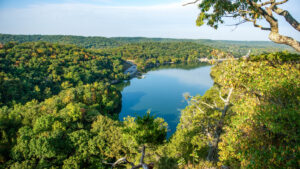 The system includes homes of famous Missourians, six sites commemorating the Civil War, mills and other historic structures including four covered bridges. Sites dedicated to the preservation and interpretation Native American settlement are present. Additionally, there are sites to learn about artists and musicians. Historic cemeteries are also found within the system.
The Division of State Parks preserves the state's most outstanding landscapes for everyone's enjoyment - deep forests, glades, prairies, caves, blue streams and lakes. There are many ways for visitors to enjoy the natural settings of Missouri. Play in the water while enjoying the geologic formations at Johnson’s Shut-Ins State Park. Hike at Prairie State Park to experience a native prairie and see the bison. Float past the lodge at Echo Bluff State Park. Fish for bass at Lake of the Ozarks State Park.
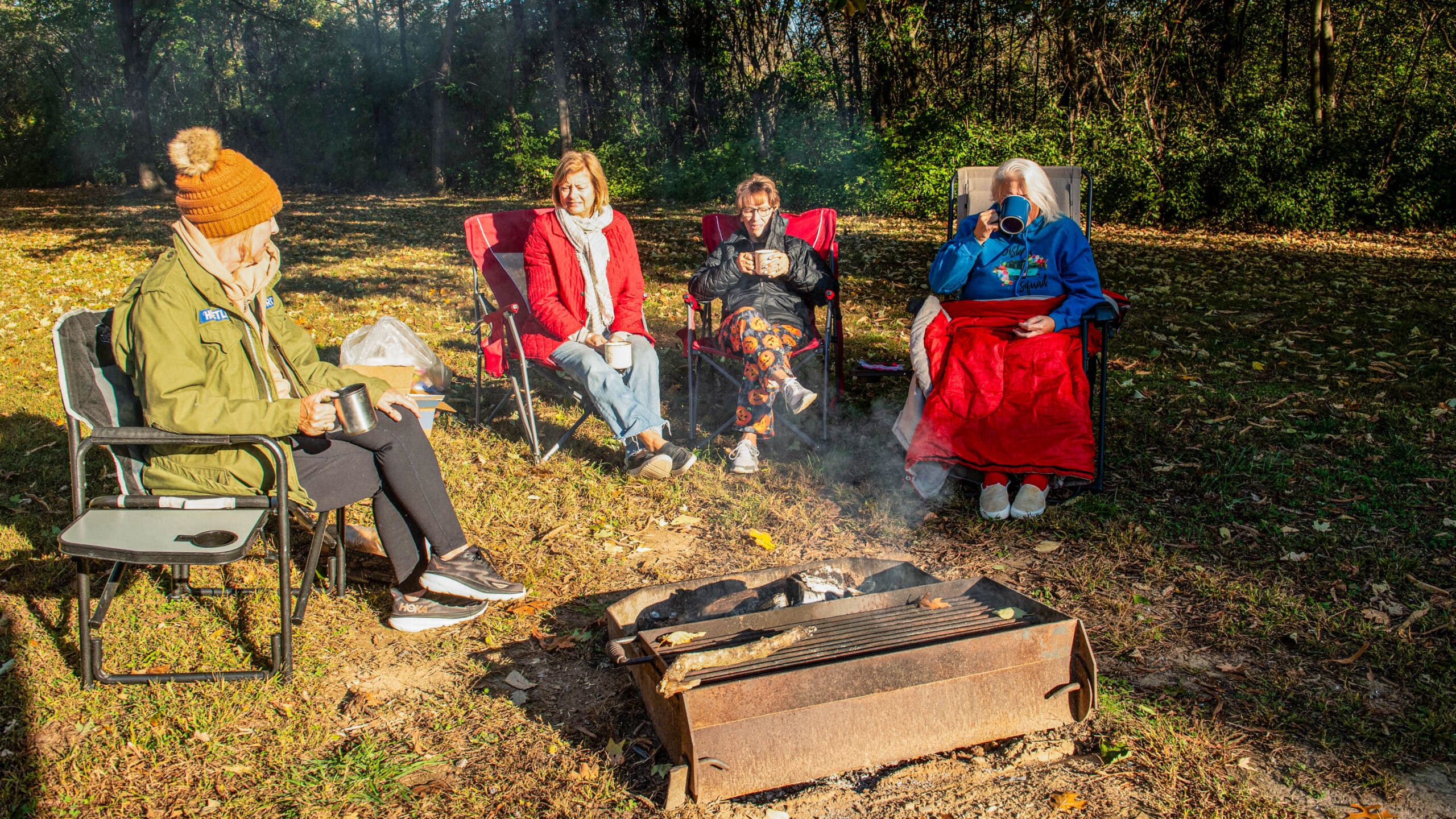
The system offers more than 3,500 campsites, 194 cabins, almost 2,000 picnic sites and more than 1,000 miles of trail. These trails include opportunities for hikers, backpackers, bicyclists, off-road vehicle users and equestrians. Missouri State Parks boasts the longest developed rails-to-trail project in the nation: Katy Trail State Park, with another one in development: Rock Island Trail State Park.
Millions of visitors hike, camp, fish, discover the past and explore nature in Missouri State Parks, which is consistently ranked as one of the nation’s top four state park systems.
State Parks Differ from Local or National Parks
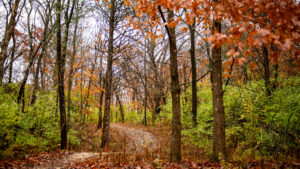
Generally, local and community parks focus on providing recreation and open spaces close to home. National parks preserve natural and historic wonders of national and international significance. State parks fit in between. State parks preserve landscapes and cultural features that are significant to that state but perhaps have even greater significance. These systems also provide appropriate recreation that is compatible with the protected resources.
The History of Missouri's State Park System
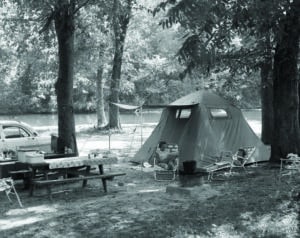
The Missouri state park fund was created on April 9, 1917. The fish and game department was responsible for the parks once they were acquired. In 1923, the state obtained the historic Arrow Rock Tavern, and 1924, the first state park tracts were secured. By the end of 1925, there were state park in eight areas with a total of 23,244 acres. That same year, the legislature increased revenue to support the growing state park system.
By 1932, Missouri had 18 state parks. As the system grew, Missourians showed even greater interest in state parks. This interest can be seen in the donated land tracts that became Roaring River, Annie and Able Van Meter and Washington state parks.
The CCC
The park system went through its most significant period of change and development in the 1930s. Beginning in 1933, under the direction of President Franklin Roosevelt, U.S. Congress authorized the Civilian Conservation Corps, or CCC.
By 1934, some 4,000 men were employed in Missouri. They built roads and bridges, dining lodges, picnic shelters, cabins and campgrounds. They also worked on other projects such as the of installation sewer lines. There were 22 CCC camps in Missouri and 15 of them were in state parks or historic sites.
Missouri State Parks boasts hundreds of structures built by the CCC. These structures are listed in the National Register of Historic Places.
A new Missouri State Park Board took over supervision of the park system in 1937. The next year, a formal plan defined the role of the state park system to “…preserve Missouri’s scenic and recreational resources, to provide opportunities for the people of Missouri to enjoy them, [and] to encourage out-of-state visitors also to enjoy them.”
Funding a State Park System
The state park system soon experienced a shortage of funds. To address this need, the 1945 state constitution established a tax, earmarking a portion for state parks. Voters approved this special provision when they approved the new constitution. In 1960, Missourians extended this constitutional provision by a two-to-one majority during a special vote on the tax, which expired in 1972.
In addition to state monies for park purposes, Missouri’s state park system drew from federal sources. Since 1965, federal revenue sharing and the federal Land and Water Conservation Fund have been used to help acquire and develop state park lands and facilities.
In 1974, a significant governmental reorganization created the Missouri Department of Natural Resources. This new department assumed the administration of the state park system. The state park system continued to grow but as Missouri entered the 1980s, the state’s economy declined.
This recession led to reduced state revenues and mandatory cuts in the budget for the state park system. At the same time, federal revenue sharing and Land and Water Conservation Funds were greatly reduced. In 1982, Missouri voters approved a $600 million statewide bond issue that included $55 million for major renovation and construction projects in state parks.
In 1984, Missouri voters again showed their support by approving a sales tax to be used for state parks and soil and water conservation efforts. Funds from this one-tenth-of-one-percent sales tax are divided equally between the two programs, both of which are administered by the Missouri Department of Natural Resources. In 1988, 1996, 2006 and 2016, more than two-thirds majority of Missouri voters renewed the tax. The sales tax is up for renewal again in 2026.
Parks, Soils and Water Sales Tax
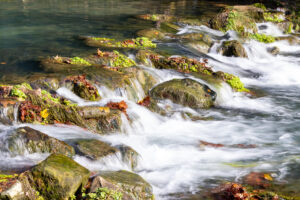
The Parks, Soils and Water Sales Tax is the main source of funding for the Missouri state park system. It provides about three-fourths of the division's budget for operation and development of state parks. Revenue generated in the state park system and some federal funds provide the remaining funds.
This money allows for the maintenance, repair and renovation of the more than 2,000 structures in the state park system. It also enables new recreational opportunities to be added, and public services continued and improved. More information can be found on the Department webpage.
Helpful Resources
The Missouri State Parks Mission
Chapter 253 of the Missouri Revised Statutes describes a state park as “…any land, site or object primarily of recreational value or of cultural value because of its scenic, historic, prehistoric, archeologic, scientific, or other distinctive characteristics or natural features.” This statute helped to establish the mission of Missouri State Parks, which is to preserve and interpret the state’s most outstanding natural landscapes and cultural landmarks, and to provide outstanding recreational opportunities compatible with those resources.
How the Mission Guides
As directed by the mission, Missouri State Parks diligently maintains the balance between resource protection and recreational access.
Missouri State Parks preserves natural resources using specific practices. Plant species are inventoried and monitored through scientific research and data collection. Prescribed fire and invasive vegetation removal maintain the diverse, native plant species.
The state’s most noteworthy natural landscapes are also identified. Wild Areas are a specific Missouri State Park designation for large tracts of land, typically greater than 1,000 acres. These areas show little to no modern human impacts. They will be free of modern infrastructure and amenities in perpetuity, and they possess outstanding opportunities for solitude in the natural environment. Link to list.
These areas are strictly protected for their wilderness benefits, and for environmental education and scientific study. The use of machinery, including chainsaws, is restricted in these areas to preserve the character of the natural world.
Missouri’s natural heritage is also protected in Natural Areas. These areas are special designations for terrestrial, geologic or aquatic sites and features that showcase the best of Missouri’s natural resources. The Missouri Natural Areas Committee, consisting of representatives of state and federal land management agencies within Missouri, oversees these designations.
Missouri Natural Areas are among the highest quality, most representative natural landscapes or features within the state. Missouri State Parks protects and manages these areas for their ecological and scientific value. Link to list.
Team members use archaeological surveys and review historical records to protect the state’s most exceptional cultural places. Building maintenance includes preservation techniques on historic structures within the state park system whenever possible. Trained professionals catalog the collection of physical artifacts at historic sites and state parks to make certain these irreplaceable objects are safely kept for future Missourians.
Visitors experience the state’s diverse natural and cultural heritage at Missouri’s state parks and historic sites. Careful planning to develop infrastructure and amenities protects the natural environments and historic landscapes within the system. Additionally, operational procedures prevent resource damage and keep visitors safe. Link to contacts page.
The Missouri Department of Natural Resources does not discriminate against anyone on the basis of race, color, national origin, age, sex or disability. If anyone believes he has been subjected to discrimination, they may file a complaint with either the Department of Natural Resources or the office of Equal Opportunity, U.S. Department of the Interior, Washington, D.C. 20240.
State Park Land Acquisition Summary
Public land donations to Missouri's state park system have been outstanding. More than 60% of the acreage in the state park system has been donated to the state. This is a remarkable record and one in which Missouri citizens should take pride.
Below is a summary of each site's addition to the Missouri state park system by year.
1923 -- Arrow Rock State Historic Site
1924 -- Bennett Spring State Park
1924 -- Mark Twain State Park
1924 -- Mark Twain Birthplace State Historic Site
1926 -- Montauk State Park
1926 -- Sam A. Baker State Park
1927 -- Meramec State Park
1928 -- Roaring River State Park
1932 -- Big Lake State Park
1932 -- Annie and Abel Van Meter State Park
1932 -- Wallace State Park
1932 -- Washington State Park
1934 -- Lewis and Clark State Park
1937 -- Dr. Edmund A. Babler Memorial State Park
1937 -- Big Oak Tree State Park
1937 -- Pershing State Park
1938 -- Crowder State Park
1946 -- Cuivre River State Park
1946 -- Knob Noster State Park
1946 -- Lake of the Ozarks State Park
1952 -- Thousand Hills State Park
1952 -- Confederate Memorial State Historic Site
1952 -- Gen. John J. Pershing Boyhood Home State Historic Site
1955 -- Hawn State Park
1955 -- Johnson's Shut-Ins State Park
1956 -- Lake Wappapello State Park
1957 -- Trail of Tears State Park
1957 -- Harry S Truman Birthplace State Historic Site
1958 -- Battle of Lexington State Historic Site
1959 -- Table Rock State Park
1960 -- Pomme de Terre State Park
1960 -- Wakonda State Park
1960 -- Boone's Lick State Historic Site
1960 -- First Missouri State Capitol State Historic Site
1964 -- Graham Cave State Park
1964 -- St. Francois State Park
1964 -- Watkins Mill State Park
1964 -- Watkins Woolen Mill State Historic Site
1965 -- Gov. Daniel Dunklin's Grave State Historic Site
1967 -- Elephant Rocks State Park
1967 -- Rock Bridge Memorial State Park
1967 -- Bollinger Mill State Historic Site
1967 -- Hunter-Dawson State Historic Site
1967 -- Towosahgy State Historic Site
1967 -- Union Covered Bridge State Historic Site
1968 -- Locust Creek Covered Bridge State Historic Site
1968 -- Sandy Creek Covered Bridge State Historic Site
1968 -- Battle of Pilot Knob State Historic Site
1969 -- Stockton State Park
1970 -- Felix Vallé House State Historic Site
1970 -- Jewell Cemetery State Historic Site
1970 -- Sappington Cemetery State Historic Site
1973 -- Finger Lakes State Park
1974 -- Bothwell Lodge State Historic Site
1974 -- Castlewood State Park
1975 -- Battle of Athens State Historic Site
1976 -- Mastodon State Historic Site
1976 -- Harry S Truman State Park
1976 -- St. Joe State Park
1976 -- Missouri Mines State Historic Site
1976 -- Jefferson Landing State Historic Site
1977 -- Dillard Mill State Historic Site
1977 -- Thomas Hart Benton Home and Studio State Historic Site
1978 -- Ha Ha Tonka State Park
1978 -- Deutschheim State Historic Site
1979 -- Robertsville State Park
1980 -- Prairie State Park
1980 -- Weston Bend State Park
1982 -- Onondaga Cave State Park
1983 -- Long Branch State Park
1983 -- Scott Joplin House State Historic Site
1984 -- Grand Gulf State Park
1984 -- Osage Village State Historic Site
1987 -- Katy Trail State Park
1990 -- Battle of Carthage State Historic Site
1991 -- Nathan and Olive Boone Homestead State Historic Site
1991 -- Taum Sauk Mountain State Park
1992 -- Big Sugar Creek State Park
1992 -- Iliniwek Village State Historic Site
1997 -- Route 66 State Park
2000 -- Morris State Park
2001 -- Edward "Ted" and Pat Jones - Confluence Point State Park
2002 -- Clark's Hill/Norton State Historic Site
2007 -- Current River State Park
2008 -- Battle of Island Mound State Historic Site
2012 -- Rock Island Spur
2013 -- Don Robinson State Park
2013 -- Echo Bluff State Park
2014 -- Sappington African American Cemetery State Historic Site
2015 -- Jay Nixon Backcountry
2016 -- Eleven Point State Park
2016 -- Bryant Creek State Park
2016 -- Shepherd of the Hills State Park
2021 -- Rock Island Corridor